
9 Simple Math Manipulatives You Already Have (and fun ways to use them)
You don’t need to spend a fortune on specialized math materials to teach your kids effectively. In fact, some of the best math manipulatives are probably sitting in your kitchen drawers or toy boxes right now. The key is knowing how to use everyday objects to make abstract math concepts concrete and engaging for your kids.
There are three main benefits to using these simple math manipulatives in your teaching. First, they make abstract concepts concrete – it’s much easier to understand what “five” means when you can see and touch five actual objects. Second, they allow you to separate skills that are often tangled together. For instance, if your child struggles with handwriting, they can still practice math concepts using objects instead of writing numbers. And third (but definitely not least), these fun activities in math make practice more engaging and memorable..
Let’s explore nine math activities with everyday objects you probably already have around your house, perfect for teaching concepts from basic counting through multiplication and division.

Basic Counting and Operations Tools
1. Small Objects for Counting
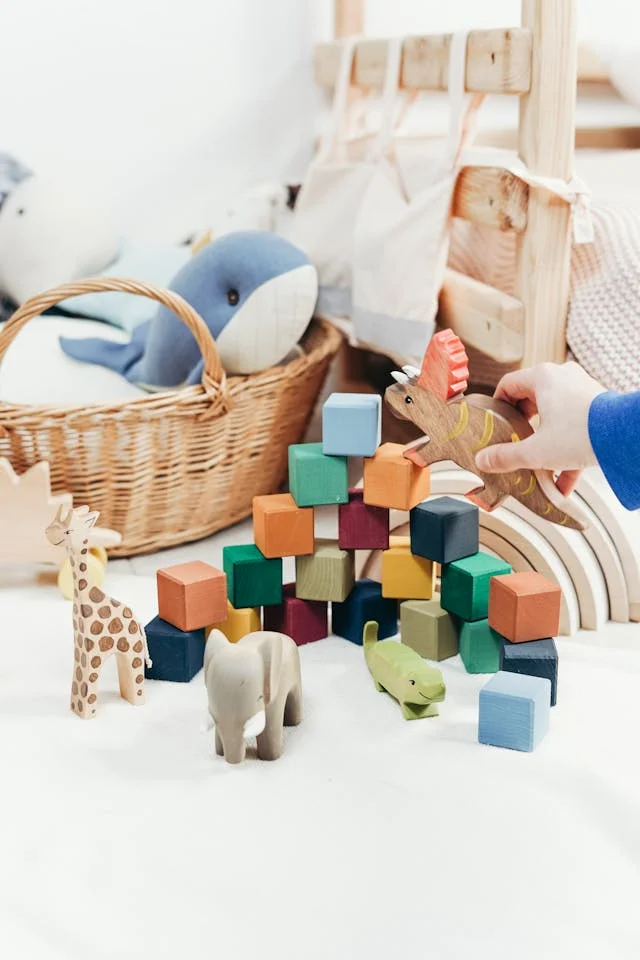
When it comes to simple math manipulatives, small countable objects are perfect for starting out Buttons, blocks, goldfish crackers, or even chocolate chips can work perfectly. Look for items that are easy to handle, not too tiny, and ideally all about the same size. Keep them organized in clear containers so you can quickly grab what you need.
At the most basic level, these objects help children understand one-to-one correspondence – that each number represents a specific quantity. Start with basic counting and sorting activities, then progress to grouping by tens as they begin to understand place value.
As skills develop, the same objects can be used for:
- Basic addition and subtraction
- Creating arrays for multiplication
- Demonstrating division concepts
- Pattern making and recognition
- Grouping and skip counting
2. Playing Cards
A regular deck of playing cards is one of the most versatile math tools you’ll ever find. Cards provide endless possibilities for fun activities in math, from simple number recognition to complex operations. For younger learners, you might want to remove the face cards at first, leaving just the number cards. Later, you can assign values to face cards (jack=11, queen=12, king=13) for more advanced practice.
One of our favorite early games is “Whose number is bigger?” – each player draws a card, and the highest number wins. This simple game helps build number sense and comparison skills without any writing required. For more ideas, check out the free PDF resource “Acing Math (One Deck at a Time)” – it’s packed with creative games for different math concepts.
Try these card-based activities:
- Addition and subtraction with multiple cards
- Pattern recognition with different suits
- Quick number facts practice
- Complex operations using face cards
- Probability and statistics games
3. Dice
Start with regular six-sided dice – you probably have some in old board games. As your kids progress, you might want to add different types of dice (like 10-sided or 20-sided) for more variety. Having 4-6 regular dice gives you lots of options for games and practice.
Dice are fantastic for generating random numbers for practice, and there’s something magical about rolling dice that makes math feel more like a game. One of our favorite activities is the graph paper rectangle game – players take turns rolling two dice and drawing rectangles with those dimensions. It’s a fun way to practice multiplication and area while developing spatial awareness.
Progress through these activities:
- Basic number recognition and counting
- Addition with two or more dice
- Multiplication practice (roll two dice and multiply)
- Area and perimeter games on graph paper
- Multi-digit operations for older kids
Visual Learning Tools
4. Whiteboard and Markers
There’s something almost magical about whiteboards – kids who balk at writing on paper will often happily work on a whiteboard. Maybe it’s the smooth writing surface, the bright colors, or just the fact that mistakes can be easily erased. Whatever the reason, whiteboards can transform math practice from a chore into something more engaging.
I recommend having both a larger wall-mounted whiteboard and some personal-sized ones. This gives you flexibility for different types of practice and learning situations. Some kids focus better standing at a wall-mounted board, while others prefer working with a small board at their desk or on the couch.
Whiteboard activities can include:
- Number formation practice
- Quick operation drills
- Problem-solving demonstrations
- Visual explanations
- Math games and practice activities
5. Paper and Graph Paper
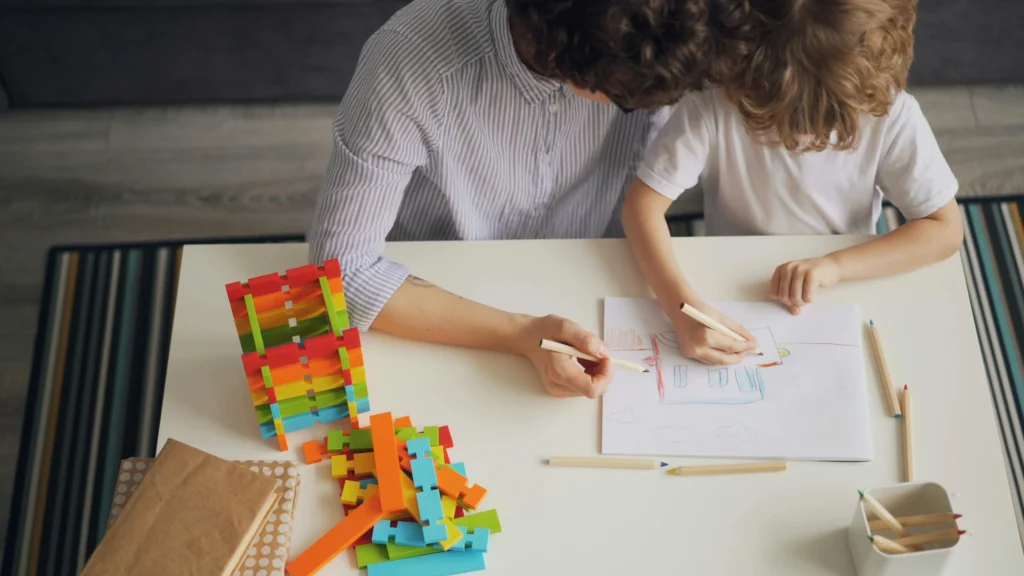
Plain paper and graph paper might not seem like manipulatives, but they’re incredibly versatile tools for math learning. The visual structure of graph paper can be especially helpful for kids who need support with organizing their work spatially.
One of the beautiful things about paper-based activities is that they bridge the gap between concrete manipulatives and abstract math concepts. If your child struggles with handwriting, remember that drawing and coloring are different skills from number formation – sometimes a child who resists writing numbers will happily draw or color them.
Progress through these activities as your child is ready:
- Drawing numbers and quantities
- Creating number lines and hundred charts
- Exploring shapes and geometry
- Working with area and perimeter visually
- Understanding fractions through paper folding
Measurement and Spatial Tools
Some of the most effective math activities with everyday objects involve measurement and spatial reasoning.
6. String and Yarn
Keep a variety of string or yarn lengths available – they don’t need to be fancy. Different colors can be helpful for some activities, but plain string works just fine. Store them rolled up or in zip-top bags to prevent tangles.
String and yarn are particularly useful for making abstract measurement and geometry concepts more concrete. These materials let kids physically manipulate shapes and measurements, which can be especially helpful for visual and kinesthetic learners.
Try these progression activities:
- Basic measurement concepts
- Comparing lengths directly
- Creating geometric shapes
- Exploring perimeter hands-on
- Demonstrating fraction concepts with lengths
7. Cups and Containers
Save various sized clear containers – they’re perfect for math activities. Clear containers let kids see what’s happening with volume and capacity, making abstract measurement concepts more concrete. Look for containers that stack or nest, and make sure they’re sturdy enough for regular use.
These simple items can teach sophisticated math concepts in a hands-on way. They’re especially useful for children who learn best through physical exploration and play.
Use them for:
- Basic sorting and counting activities
- Volume comparison experiments
- Estimation challenges
- Fraction demonstrations
- Data collection and graphing
8. Kitchen Measuring Tools
Basic measuring cups and spoons from your kitchen drawer can become powerful math teaching tools. Having both standard and metric measurements can be useful but isn’t essential when starting out.
Measuring tools naturally connect math to real-life situations, which can be highly motivating for many kids. Plus, the end result often involves something tasty! Remember that cooking involves multiple skills – don’t let reading recipes or complex fractions overshadow the basic math concepts you’re trying to teach.
Progress through these concepts:
- Estimation practice
- Basic volume comparisons (bigger/smaller)
- Simple fraction work with whole units
- Converting between measurements
- Recipe math (doubling, halving)
Real World Application
9. Coins and Money
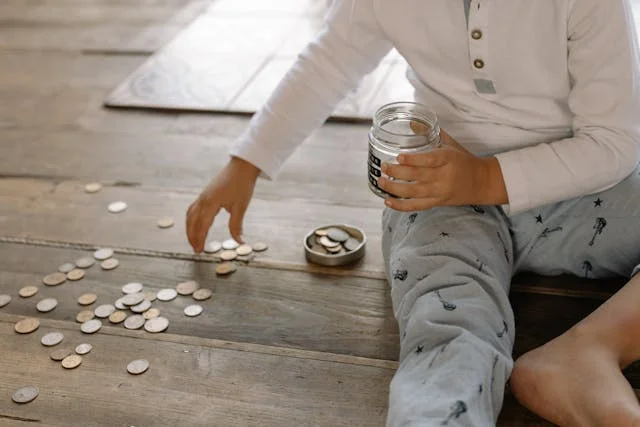
Real coins are perfect for math practice, but play money works too. The great thing about using money for math practice is that it’s inherently motivating – kids understand that this is a skill they’ll actually use in real life. Like other math activities with everyday objects, using real money helps children connect abstract concepts to daily life.
One of our favorite money activities is playing store. Set up a little shop with items from around the house, add price tags, and let kids practice making purchases and giving change. I’ve even known kids to master multiplication through playing Blackjack with coins (though you might want to call it “Twenty-One” instead!).
Progress through these money activities:
- Basic coin recognition and values
- Counting combinations of coins
- Making change games
- Real-world shopping practice
- More complex money calculations
Tips for Success with Simple Math Manipulatives
The key to successful math learning isn’t having the fanciest materials – it’s using simple tools effectively and adjusting your approach based on your child’s needs. Here are some important things to remember:
- Every child learns differently – what works for one might not work for another
- It’s okay to stick with manipulatives longer than you think you “should”
- Don’t force handwriting practice during math concept learning
- Keep fun activities in math short and engaging
- Store materials where they’re easy to access
- Let your child’s interest guide which tools you use most
Everyday Math
Remember those three key benefits we talked about at the beginning? Using everyday objects as math manipulatives doesn’t just make abstract concepts concrete and learning more fun – it also shows kids that math is a natural part of daily life, not just something that happens during “math time.”
Focus on understanding over worksheets, and don’t be afraid to keep using manipulatives even when your child seems to understand a concept. Sometimes returning to concrete objects can help solidify understanding or reveal gaps that need more work.
Most importantly, trust your instincts about what your child needs. You know better than anyone when they’re ready to move forward or need more practice with a particular concept. These simple math manipulatives, combined with a flexible approach, can help your child build a strong foundation in mathematics – no expensive materials required.



One Comment