Wake Up to Life: Why Reading the Classics Will Transform Your Homeschool
As homeschooling parents, we are deeply committed to giving our children the best education possible. For me, and I think for most homeschooling parents, this means more than just good grades, college acceptance, and career success.
We want something deeper. We want our children to be truly alive – passionate, engaged, aware. We want them to develop wisdom and values that will guide them through life’s challenges and give them a foundation for meaningful adult lives.
This isn’t something we can achieve through lectures and worksheets alone. But I’m convinced that reading the classics is an irreplaceable part of the answer. Through these timeless works, we and our children can learn from men and women who devoted their lives to thinking deeply about what it means to be human and to live well.

Why Reading the Classics Matters
Let me share something I discovered about reading the classics – it’s about so much more than just gaining knowledge. When we immerse ourselves in these works, we’re not just checking off boxes on some academic list. We’re learning to notice connections between ideas, to understand people better, and to see the beauty in our everyday lives. And you know what? This new awareness changes everything about how we teach and connect with our children.
I wish I’d learned this earlier. Even though I graduated high school with good grades, I hit a wall when I tried studying philosophy in college. Despite my GPA, I had never really learned how to wrestle with complex ideas or tackle original texts. Those mental muscles just weren’t there. Now as a homeschool mom, this experience deeply influences how I teach – I want my kids to develop these skills naturally, long before they head off to college.
How Literature Changes How We See
When I talk about literature awakening us to life, I’m not speaking lightly. I’ve experienced this transformation personally. Let me share some examples of how great authors have helped me appreciate the profound beauty in everyday family life, especially in how I see my children and my role as a parent.
Take George Eliot’s “Silas Marner.” Before she wrote this masterpiece, Eliot had never had children of her own, yet she captures something absolutely true about how children bring meaning to our lives. Through Silas’s transformation from a lonely miser to a devoted father, she shows us how caring for a child can open our hearts in ways we never expected. When Silas realizes his love for little Eppie far surpasses his former obsession with gold, we see a truth about parenting that’s both simple and profound: children enrich our lives just by being themselves, and the privilege of caring for them and being loved by them is worth more than any material treasure.
Children enrich our lives just by being themselves, and the privilege of caring for them and being loved by them is worth more than any material treasure.
– lesson from silas marner by george eliot
In another of her works, “Middlemarch,” Eliot gives us a wonderfully relatable glimpse of homeschooling from an earlier era. Her description of mothers teaching their sometimes-distracted, often-bickering children reminded me that this work we’re doing isn’t new. Mothers have been teaching their own children since time immemorial, and we’ll keep on doing it. There’s something reassuring about knowing we’re part of this long tradition.
Mothers have been teaching their own children since time immemorial, and we’ll keep on doing it.
– Lesson from middlemarch by george eliot
Victor Hugo’s writings have perhaps influenced my parenting perspective most profoundly. Hugo had a special gift for seeing the sacred in the ordinary, especially when it came to children and motherhood. Whether he’s describing the mother of three children in “Ninety-Three” or Esmeralda’s mother in “Notre-Dame de Paris,” he infuses these portraits with such reverence that it changes how you see your own family life. Through his eyes, we learn to see the romance and beauty in our everyday moments with our children.
The sergeant took a bit of regulation bread from his pocket, and handed it to the mother. She broke the bread into two fragments, and gave them to the children, who ate with avidity.
– quote from ninety-three by victor hugo
“She has kept none for herself,” grumbled the sergeant.
“Because she is not hungry,” said a soldier.
“Because she is a mother,” said the sergeant.
Literature Changes How We Think
Here’s another reason why I think it’s so important to read classic literature with our kids.. If we can’t read and understand classic works for ourselves, we’re always at the mercy of other people telling us what to think. Think about what a revolution it was when the King James Bible was first published – suddenly, common people could read scripture directly instead of relying on priests to interpret everything. It changed the course of history through the Reformation and beyond.
I believe something similar is at stake when we teach our children to read classic literature. These works are our cultural heritage – they contain the ideas that shaped our world. If we can’t engage with them directly, we’re cutting ourselves off from truly understanding our own culture and any hope of influencing where it’s heading. For me, this is what real education is about, and it’s why teaching classics in homeschool is so crucial.
Making It Actually Happen
But let’s be practical. We’re all busy. How do we actually make this happen in real life?
First, if you’re exhausted, address that. The first principle of Homeschool Teacher Training is NO MARTYRS. Take a week off if you need to. Stock up on simple meals and rest until you feel human again. Wait until your kids are six months or a year older if they are young and childcare is taking up all your energy. I get that! It’s a season of life. but ou need to take care of yourself. You can’t pour from an empty cup, and being chronically exhausted isn’t sustainable for good homeschooling.
Once you’re ready, here are some practical ways to start:
- Try the Read With Me resource. Lisa VanDamme reads classics aloud, stopping to explain and discuss each chapter. It’s perfect if you’re unsure about tackling classics on your own, and it couldn’t be easier.
- Start with quality children’s literature. Look at Newberry award winners from 1990-2010 – there’s a wealth of excellent books that are both accessible and profound. Read these out loud to your children. Practice summarizing the events of each chapter with them and asking questions to understand the characters’ actions.
- Follow your curiosity. When you see an interesting reference in a movie, book, or even a meme, explore it. Some of the best reading journeys start with “I wonder what that’s from?”
Also, here’s a secret permission slip from me to give up on books you aren’t enjoying a few chapters in. Some “classics” might not resonate with you, and that’s okay. However, don’t give up too quickly either. A truly great book always has something to teach you, and reading the classics should feel like getting to know a new friend.
The Joy of Reading Together
One of the most beautiful aspects of incorporating classic literature into your homeschool is that it doesn’t have to be a solitary activity. In fact, I’ve found that reading the classics together creates some of our most meaningful learning moments.
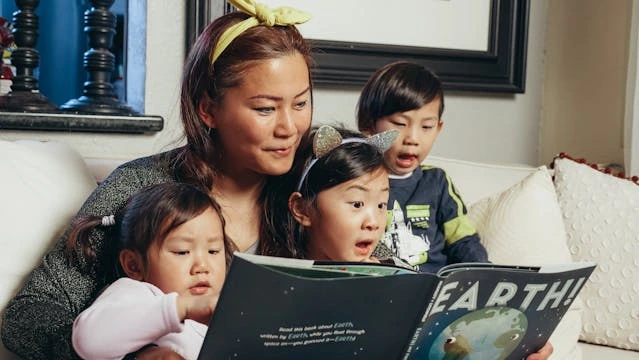
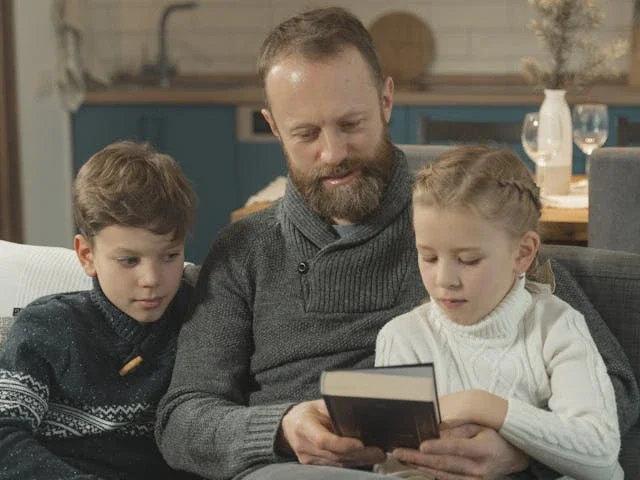
In our homeschool, literature is a family subject. Whether I’m reading aloud or we’re listening to an audiobook together, we read all of our assigned books together. My kids like to colour or work on crafts while they listen, because a little movement actually helps them focus better. When I’m reading aloud, we usually cuddle on the couch, though sometimes they’ll draw quietly nearby. The key is creating an atmosphere where everyone can comfortably engage with the story.
Why do we always read together rather than assigning independent reading? There are several important reasons:
- It’s practical – we don’t need multiple copies of each book.
- It creates natural opportunities for discussion as we experience the story together.
- It’s efficient – I can guide their understanding and ask questions in real time.
- Most importantly, it’s a precious shared experience that builds family culture.
This approach also helps separate different reading skills. Yes, my children practice reading independently – they enjoy their Dog Man and Diary of a Wimpy Kid books, and that’s perfectly fine. But our homeschool literature time has a different purpose. It’s not about practicing phonics or building reading fluency; it’s about sitting at the feet of great artists and becoming better humans. Sometimes they’ll read a paragraph or take parts in a play, but I’ll gladly read to them in our literature class for as long as they’ll let me.
Finding Your Rhythm
Over the years, we’ve experimented with different routines. When my children were younger and we were just establishing our homeschool rhythm, we started each day with reading on the couch. This worked beautifully because they loved it, and it helped everyone transition into a learning mindset. Now we typically do math and English first – taking more of a “swallow the frog” approach – before settling in for our reading time.
For families just starting out, one simple option is to incorporate audiobooks into your evening routine. Sometimes we’ll seek out special audiobook versions read by the authors themselves – there’s something magical about hearing E.B. White read The Trumpet of the Swan or Madeleine L’Engle share A Wrinkle in Time. It’s like inviting these great authors into our living room for a personal reading. Listening together while working on a puzzle or craft after dinner can be a wonderful way to begin building this habit without adding pressure to your school day.
The Ripple Effects
The impact of this shared reading time isn’t always obvious in dramatic moments. Instead, it manifests in subtle but profound ways. My children have developed an ear for beautiful language, often bringing me lovely phrases or poetical sayings they’ve discovered in their own reading. They notice and appreciate beauty in ways that might otherwise have passed them by. Perhaps most meaningfully, they’ve developed a natural reverence for human experience and life’s good things that seems remarkable for their age.
Where to Begin: Your First Steps into Classic Literature
When you’re teaching classics in homeschool, start small. You don’t need to dive straight into War and Peace. Here are some concrete ways to begin building this practice in your homeschool:
For Reading Together
These homeschool literature selections are perfect for grades 3-4 and up:
- “The Hundred Dresses” – This shorter classic offers profound insights about kindness and understanding, making it an excellent introduction to discussing deeper themes through literature
- “Charlotte’s Web” – E.B. White’s masterpiece combines gorgeous prose with deep themes about friendship and life’s cycles, making it perfect for both parent and child
- “Matilda” – Roald Dahl celebrates the transformative power of reading in this witty, engaging story that especially speaks to book-loving families
- “Ella Enchanted” – A clever reimagining of Cinderella that encourages critical thinking
- “Anne of Green Gables” – L.M. Montgomery’s charming story introduces complex character development while remaining thoroughly entertaining
- “The Secret Garden” – Frances Hodgson Burnett’s tale of transformation resonates with both children and adults, offering rich discussions about growth and healing
For Introducing Shakespeare
The Shakespeare Week website offers an excellent entry point into the Bard’s works. You can begin with child-friendly versions of the plays and engaging activities, making the language and themes accessible before tackling the original texts. When your children are ready, try reading a scene or two from the actual plays – you might be surprised by how much they enjoy the dramatic language and universal themes.
Helpful Resources
Consider keeping an anthology like “The Book of Virtues” by William Bennett on hand. These collections offer a variety of shorter works – stories, poems, and essays – that you can easily fit into busy days. These collections are perfect for busy days when you’re just starting out with reading the classics.
In fact, these shorter pieces can be a wonderful way to start developing your own relationship with classic literature. They give you a taste of different authors and styles, helping you discover what resonates with you and your family. These books make teaching classics in homeschool both meaningful and manageable. Think of it as sampling at a literary feast – you might find some unexpected new favourites!
Taking the First Step
Remember, this isn’t about adding one more thing to your to-do list. It’s about waking up to a richer, more meaningful way of learning and living – both for you and your children. Start small, but start somewhere. Pick up a book that intrigues you. Set aside ten minutes a day. Join a reading community. The journey of a thousand books begins with a single page.
Your children’s education will be profoundly shaped by your own engagement with ideas and literature. As you wake up to the power of classic literature in your own life, you’ll naturally become better equipped to guide them toward the kind of deep, meaningful education you envision.
What book will you start with today?